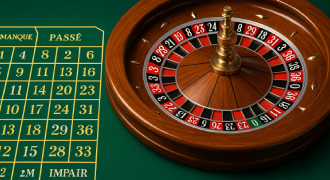
Understand Roulette Odds – Improve Your Chances to Win
To play smarter, learn how roulette odds work—what each bet pays versus how often it should hit. We’ll show how single-zero (European) and double-zero (American) wheels change your chances, why the zero tilts even-money bets, and how to read a paytable. With that, you can pick higher-frequency wagers, set sensible stakes, control swings, and stretch your bankroll.
Overview to Roulette Odds
If the spin thrills you yet you want tighter control of results, begin with fundamentals—master the wheel’s outcome probabilities [1]. They tell you how often a bet should win over the long run and how that compares with the payout you receive. When you match realistic expectations with smart stake sizing, you make better decisions before every spin.
New players often ask, what are the odds in roulette? In short, your chances depend on the wheel type and the bet you place. A single-number bet wins less often but pays more. Even-money bets win more often but pay 1:1. In the sections below, you’ll see the exact probabilities for common bets, how different wheels change results, and which choices give you steady performance without confusion.
Roulette Odds for Each Bet Category
The layout offers “inside” bets (specific numbers or small groups) and “outside” bets (larger groups like red/black). Each category has different hit rates and returns. Aligning your selection with roulette odds and payouts [2] helps you choose consistent options for your bankroll and time at the table.
Inside bets look exciting because of their high payouts, but their hit rates are low. Outside bets fire more often and keep sessions calmer, which can be ideal if you like longer play. As you read through, note how payouts compare with probability; this is the key to spotting value and keeping sessions sustainable.
Inside Betting Odds
Inside wagers target precise outcomes—like one number, two numbers that share a line, or a small block. These are essential to understanding roulette table odds because they define how aggressive you want to be. While the allure of a 35:1 payout is strong, make sure your budget can handle the lower hit rate that comes with it.
Below is a quick reference for European (single-zero) and American (double-zero) probabilities and payouts. Values are per spin and rounded for readability.
|
Inside Bet |
Numbers Covered |
Payout |
European Chance |
American Chance |
|
Straight (1 number) |
1 |
35:1 |
1/37 ≈ 2.70% |
1/38 ≈ 2.63% |
|
Split (2 numbers) |
2 |
17:1 |
2/37 ≈ 5.41% |
2/38 ≈ 5.26% |
|
Street (3 numbers) |
3 |
11:1 |
3/37 ≈ 8.11% |
3/38 ≈ 7.89% |
|
Corner (4 numbers) |
4 |
8:1 |
4/37 ≈ 10.81% |
4/38 ≈ 10.53% |
|
Six Line (6 numbers) |
6 |
5:1 |
6/37 ≈ 16.22% |
6/38 ≈ 15.79% |
Notes that help:
- The payout structure is identical across variants, but American wheels include an extra 00 pocket, slightly trimming hit rates.
- Session planning matters. Consider lowering unit size for straight-up bets, and use clear stop-loss and win-goal markers.
Outside Betting Odds
Outside wagers include red/black, odd/even, high/low, dozens, and columns. Because they cover more numbers, they hit more often and smooth out variance. When players look for betting odds on roulette that keep bankrolls steadier, these are the most common picks.
Even-money bets (red/black, odd/even, high/low) land on 18 of 37 pockets on single-zero wheels and 18 of 38 on double-zero wheels. Dozens and columns cover 12 numbers each, trading a bit of frequency for a 2:1 payout. If you value table time and consistent feedback from the wheel, outside wagers are usually the right starting point.
Unique & Special Bet Odds
Some layouts and rule sets add specialty wagers. On American tables, the five-number “basket” (0, 00, 1, 2, 3) pays 6:1 and is noteworthy because it increases house edge compared to other bets. If you track 00 odds roulette for this group, you’ll see it’s one of the poorest choices from a value standpoint.
Other special options include neighbor bets on European-style tracks and call bets like Voisins, Tiers, and Orphelins. These groupings help cover wheel sectors rather than board shapes. They’re fun for variety but still follow the same math: more coverage means more frequent hits, typically at lower returns.
Grasping the Fundamentals of Roulette Probabilities
Every spin is independent. That means previous results do not alter the next outcome. Understanding this prevents common pitfalls like “chasing” or expecting patterns to continue. When you plan sessions with realistic targets and a flat or gently progressive stake, you turn knowledge into useful discipline based on roulette wheel odds.
To judge any wager, compare the chance of winning to the payout you’ll receive.If payouts exceeded the real probabilities, you’d hold the advantage—but this game is built the opposite way. Recognizing this sets the tone for managing expectations, selecting bets that match your comfort with variance, and protecting your bankroll with structured limits.
Odds Across Different Roulette Variants
Wheel selection changes the math. European (single-zero) wheels have 37 pockets; American (double-zero) have 38, which trims hit rates and raises the edge. French uses the same 37-pocket wheel, but rules like la partage can shield even-money stakes on zero, improving long-run results—this all flows directly into roulette odds.
When you have a choice, favor rules that protect even-money bets on zero; in streaming play, many players therefore prefer European or French tables.
European Roulette Odds Explained
Numbers run 0–36 (37 total). A straight wins 1/37; even-money wins 18/37, and most wagers carry a 2.70% house edge because payouts don’t fully match probability.
Prefer outside bets for frequent hits; use inside bets sparingly for bigger spikes, and judge results over sets of spins, not single outcomes.
American Roulette Odds Explained
Adding 00 creates 38 outcomes, shaving hit rates and lifting most edges to 5.26%; the five-number basket climbs to 7.89%.
When comparing games—especially within dealer games—blackjack vs roulette odds shows why shorter sessions, smaller units, and selective bets make more sense on American layouts.
French Roulette Odds and the La Partage Rule
With la partage (or en prison) on even-money bets, a zero refunds half your stake, dropping the effective edge from 2.70% to 1.35%—a direct boost to roulette odds. If you favor even-money play, French rules are a clear upgrade: variance remains, but zero stings less and your bankroll lasts longer.
Red/Black, Odd/Even, High/Low Odds
Even-money bets are the simplest way to see the odds of winning roulette on large groups: 18/37 (~48.65%) on European, 18/38 (~47.37%) on American.
They don’t pay big, but they hit often and steady swings—just remember green zero (and 00) breaks the 50/50 illusion.
Columns and Dozens Odds
Each covers 12 numbers: 12/37 (~32.43%) on European, 12/38 (~31.58%) on American, paying 2:1—great mid-risk options often cited among the best odds in roulette for balanced play.
If you layer a column with a few straight-ups, cap total risk per spin and stick to written unit sizes, spin counts, and stop points.
Comparing Payouts Versus the House Edge
A smart approach compares actual probabilities to payouts. When the payout ratio falls short of the true chance, the house edge fills the gap. That’s how casinos—live casino included—keep the lights on, and why your plan should favor steady bets and structured sessions instead of chasing.
Context from other games helps too.As noted, with optimal play and friendly rules, blackjack has the stronger expected return, and roulette odds are generally better on European/French wheels than on American (double-zero). Use this to set expectations, then select bets that match your risk comfort and entertainment goals.
Quick comparison table
|
Variant / Bet Type |
Typical House Edge |
|
European (most bets) |
2.70% |
|
French (even-money with la partage) |
1.35% |
|
American (most bets) |
5.26% |
|
American “basket” (0, 00, 1, 2, 3) |
7.89% |
Top Bets in Roulette with the Highest Winning Chances
If your goal is frequent hits and longer sessions, even-money wagers and the 2:1 group bets are your best allies. They won’t deliver massive spikes, but they help preserve funds while you enjoy the rhythm of the game. Many players label these as roulette best odds choices for consistency.
Columns and dozens are solid middle ground. They win around a third of the time on European wheels and pay 2:1. These can be paired with conservative money management so you absorb inevitable droughts and still give yourself many looks at a session-level profit.
Worst Odds in Roulette: Bets You Should Avoid
The American five-number basket is infamous for carrying the highest edge on the layout; even if it feels like a handy way to cover zeros and low numbers, the math won’t support it long term. If you’re set on an American wheel, skip that wager and stick to standard inside or outside bets—your plan will align better with roulette odds.
Ultra-narrow coverage without a clear plan can hurt, especially if you raise stakes after short losing runs. Keep risk per spin sensible, cap progressions, and avoid convoluted systems that hide total exposure. Smart play is simple, clear, and consistent.
Tips for Maximizing Your Winning Odds
Plan sessions in advance: buy-in, unit size, spin count, and clear exit points. Flat betting is the easiest way to read results because you aren’t changing stake sizes during streaks. If you experiment with mild progressions, set a hard ceiling to prevent runaway losses.
Digital tools can help you learn. A roulette odds calculator [5] lets you plug in a bet and see its expected frequency and return. Use it as an educational aid—not as a promise of profit—so you understand how coverage and payouts interact before you play for real money.
Quick, practical checklist
- Pick the friendliest wheel available (French > European > American).
- Favor even-money or 2:1 groups for steady sessions.
- Keep units small; extend time at the table.
- Set stop-loss and win-goal limits in writing.
- Track spins in short sets (e.g., 50) and reset.
- Avoid the American five-number basket.
Live & online essentials
- Look for live casino tables that support interactive play and real-time bets for clear decision windows.
- Quality studios provide streaming play with professional hosts, categorized under dealer games, and optimized for mobile live so you can watch outcomes clearly without lag.
Best Strategies to Leverage Roulette Odds
No tactic can beat the built-in edge, but you can still make smart choices. Pair friendly wheels with steady wagers and practical money rules. If a table offers French rules, make even-money bets your core. If only American is available, lower your unit size and shorten sessions.
Sector coverage can be fun, but always measure the total risk you’re placing per spin. Aim to cover a useful slice of numbers without overextending. Write down your selections, use a timer to break sessions into small blocks, and evaluate whether your plan fits your goals. If you’re hunting a best odds roulette strategy, it’s this: choose the lowest-edge rules, pick higher-frequency bets, and control stake size with discipline.
Recap: How to Get the Best Odds in Roulette
Pick the friendliest wheel, favor steady wagers, and plan each session. Use roulette odds to set realistic goals and stick to them—small, consistent choices control variance. Enjoy the game: add a few inside bets for variety, but let outside bets lead. Protect your bankroll for a smoother, more engaging ride.
FAQ
Which Roulette Bet Has the Highest Odds?
Even-money bets—Red/Black, Odd/Even, High/Low—hit most often: about 48.65% on European wheels and 47.37% on American wheels.
How Does the Zero Impact My Chances?
Zero (and 00) isn’t red/black, odd/even, or high/low, so it turns many even-money bets into losses and creates the house edge. On French tables, la partage halves that loss on zero for even-money bets.
Are American Roulette Odds Worse Than European?
Yes. The extra 00 raises the house edge on most bets from 2.70% (European) to 5.26% (American).
Can I Lower the House Edge in Roulette?
You can’t beat it, but you can reduce it: choose French rules with la partage (even-money bets drop to 1.35% edge) or pick European over American.
Is There Any Bet with No House Edge at All?
No. In standard play, every wager is priced for the house; no betting system can erase that built-in edge.
What Are the Chances of the Same Color Appearing Multiple Times?
Use (18/37)k(18/37)^k(18/37)k on European (or (18/38)k(18/38)^k(18/38)k on American) for kkk in a row. Example: 5 reds in a row ≈ 2.7% on European (≈ 2.38% on American).