Understand Blackjack Odds – Maximize Your Winning Potential
Blackjack is one of the most iconic and strategically rich casino games, blending chance with skill in a way that keeps players engaged hand after hand. Played against the dealer rather than other players, the objective is simple yet compelling—build a hand total closer to 21 than the dealer’s without going over. Its origins trace back to 17th-century France, but today it’s a global staple, from glamorous Las Vegas floors to online live-streamed tables.
The allure comes from its balance of quick decisions, straightforward rules, and the potential to reduce the house edge through smart play. Every card dealt carries both risk and opportunity, making each round a fast-paced mix of calculation, probability, and anticipation. For seasoned players and newcomers alike, understanding how the Blackjack odds work is the key to unlocking Blackjack’s full winning potential.
How are the odds in Blackjack?
Blackjack is a probabilistic system with stable baselines, not a guessing game. Card values produce a predictable house edge that you can trim with disciplined decisions. The odds of winning Blackjack improve when rules pay 3:2, the dealer stands on soft 17, and you execute basic strategy without deviations. Translate each rule into risk, then deploy only the moves that raise expected value.
– Chance of Hitting a Natural Blackjack
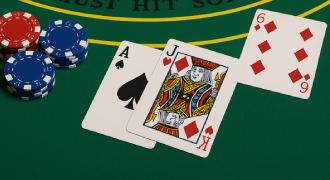
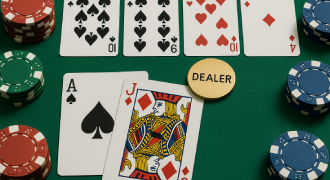
A natural occurs when your first two cards are an Ace and a 10-value. In a 1-deck game, the probability is about 4.83%; with 2 decks it’s ~4.78%; with 4–8 decks it trends toward ~4.75% because added decks dilute the Ace–ten pairing. That small percentage drives a large revenue lever due to the payout ratio on naturals. When rules pay 3:2, your Blackjack odds get a material uplift; at 6:5, the value compresses, and the house edge expands.
– Bust Probabilities Based on Your Hand
When you hit a hard 12, your bust probability is ~30.77% (only a 10-value breaks you). For hard 13–20, bust risk rises roughly in steps: 38.46% (13), 46.15% (14), 53.85% (15), 61.54% (16), 69.23% (17), 76.92% (18), 84.62% (19), and 92.31% (20) under infinite-deck approximation. You should anchor decisions to these hand odds, not intuition. Stand when additional risk doesn’t justify EV.
– Dealer Bust Rates and What They Mean
Dealer behavior is scripted, which lets us forecast when dealer busts. Typical bust rates by upcard: 2 (~35%), 3 (~37%), 4 (~39–41%), 5 (~42–43%), 6 (~42%), 7 (~26%), 8 (~24%), 9 (~23%), 10 (~21%), Ace (~12%). Your playbook: press edges when the dealer shows 4–6, contain risk against 7–Ace. These are the practical chart values that drive tactical decisions.
Simple Odds Chart Every Player Should Know
Below is a concise odds chart with guidance you can operationalize fast. It marries your bust probability to dealer risk by upcard so your moves are consistent and scalable across sessions.
|
Player Hard Total |
Dealer 2–6 |
Dealer 7–A |
Bust % If Hit |
Move (Baseline) |
|
12 |
Favorable |
Risky |
30.77% |
Stand vs 4–6; otherwise Hit |
|
13–16 |
Strong edge vs 2–6 |
Weak vs 7–A |
38.46–61.54% |
Stand vs 2–6; Hit vs 7–A |
|
17–20 |
Edge from standing |
Edge from standing |
69.23–92.31% |
Stand |
|
9–11 (no Ace) |
Double vs weak upcards |
Contextual vs 10/A |
— |
Double 9 vs 3–6; 10 vs 2–9; 11 vs 2–A |
|
Soft 13–18 |
Attack 4–6 |
Play small vs 7–A |
— |
Double soft 13–18 vs 4–6 (varies by rules) |
– Blackjack Probabilities for the Dealer's Hand
Dealer finish distribution (S17, multi-deck typical): 17 (~14%), 18 (~14%), 19 (~14%), 20 (~17%), 21 (~12%), bust (~28%). When you hold middling totals (12–16), the dealer’s clustering on 17–20 explains why standing versus 2–6 is profitable while hitting into 7–Ace is often required. Use this distribution to calibrate your risk budget hand by hand.
Outcome Probabilities for Every Hand
Here’s the executive view: for every starting total, we quantify the win/lose/push mix, player bust probability, and dealer finish distribution so your choices map cleanly to expected value. Use these outcome probabilities as a live control panel—align bet sizing and actions to the numbers, and you’ll tighten variance while protecting edge.
- Your Chances of Winning, Losing, or Tying a Round
Across common 6-deck S17 games with no surrender, baseline outcomes center around ~42% wins, ~49% losses, and ~9% pushes when you adhere to basic strategy. These Blackjack winning odds flex with rule quality: 3:2 naturals and late surrender nudge win/push up and reduce loss frequency. Poor rules reverse that. Tie these deltas back to bankroll KPIs and session targets. - Likelihood of Busting on Different Hand Totals
Use the following Blackjack odds table as a quick-hit risk dashboard. It shows the likelihood you bust if you take one card on a hard total (infinite-deck model).
|
Hard Total |
Bust Probability |
|
12 |
30.77% |
|
13 |
38.46% |
|
14 |
46.15% |
|
15 |
53.85% |
|
16 |
61.54% |
|
17 |
69.23% |
|
18 |
76.92% |
|
19 |
84.62% |
|
20 |
92.31% |
- How Often Dealers Go Bust
Map dealer upcard to risk and act accordingly. Against 4–6, expect the dealer to fail around 40–43% of the time, which justifies standing on many marginal hard hands. Against 7–Ace, bust rates fall to the low-to-mid 20s (and ~12% vs Ace), so you must generate value by hitting or doubling. That is the core EV narrative behind the odds table decisions.
Side Bets and Special Hands: The Odds Breakdown
Side bets and special hands look shiny, but the only KPI that matters is expected value—this breakdown quantifies payout ratios, variance, and how each option moves your house edge. We’ll benchmark Insurance, 21+3, Perfect Pairs, Blackjack Match the Dealer odds, splits, doubles, and surrender with clear chart values so you know when to deploy capital and when to stand down.
– Should You Take Insurance? Let’s Talk Odds
Insurance is a standalone wager that the dealer has Blackjack; it carries a house edge around 7% in multi-deck unless you’re counting. The price point isn’t aligned with the true frequency of a 10-value in the hole, so the expected value is negative. Operational guidance: skip insurance in normal play. It doesn’t enhance your odds winning Blackjack; it only hedges variance at a long-run cost.
– When Surrendering is Statistically Smart
Late surrender (where allowed) cuts loss severity on terrible matchups. Baseline surrender triggers: hard 16 vs 9/10/A and hard 15 vs 10 in many S17 games. The move converts a full-unit loss into a half-unit loss when your EV is worse than −0.5, improving your session’s risk-adjusted ROI. Treat surrender as a cost-containment lever, not a sign of weakness.
– Double Down Scenarios and Probabilities
Doubling monetizes your strongest single-card projections. With 11, your winning chance typically exceeds 55% versus 2–10; with 10 you’re strong versus 2–9; with 9 you target 3–6. Soft doubles (A,2–A,7) win by leveraging dealer weakness (4–6) rather than raw total. Always reconcile the double’s payout ratio (2× exposure) with your projected hand odds.
– Odds of Winning After a Split
Splitting upgrades EV when one medium-strength hand can become two profitable hands. Always split Aces and 8s; avoid 5s and 10s; split 2s/3s/6s/7s/9s based on dealer upcard quality. Post-split hand odds tend to outperform a single stuck total, especially against 4–6 where dealer busts are frequent. Use this lever to convert bad structures (like 8,8) into two revenue lanes.
– 21+3 & Perfect Pairs: Side Bet Odds
Side bets trade entertainment for margin—yours to the house. 21+3 typically posts a house edge in the ~3–7% corridor depending on the exact Blackjack payout odds and pay table; Perfect Pairs usually ranges ~5–13%. Calibrate spend as discretionary, not core strategy. If available, review pay-table chart values before allocating units.
– What Does “6 to 5” Blackjack Mean for You?
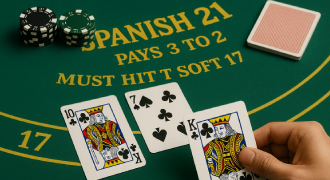
A 6:5 natural reduces the value of your best event, adding roughly 1.3–1.4 percentage points to the house edge versus 3:2. That single change downgrades RTP dramatically and kneecaps your long-term EV. If you’re prioritizing the best Blackjack odds, 6:5 is a hard pass. Your governance rule: prefer 3:2 only.
How Deck Count Impacts the Game Odds
Deck inflation dilutes natural frequency and complicates composition-dependent plays. Single-deck offers superior theoretical EV but often arrives bundled with harsh rules (e.g., H17, no DAS, 6:5). Multi-deck reduces card-removal leverage and slightly elevates the house odds Blackjack profile. Net it out: chase rules first, then deck count.
|
Decks |
Chance of Natural |
|
1 |
~4.83% |
|
2 |
~4.78% |
|
4 |
~4.76% |
|
6 |
~4.75% |
|
8 |
~4.75% |
Rule Variations and Their Effect on Win Probability
Rules are the P&L drivers. S17 trims house edge; H17 adds ~0.2%. Late surrender subtracts loss, double after split (DAS) adds flexibility, and resplitting Aces is a material uplift. Compile rules into a quick Blackjack odds chart and prioritize tables accordingly.
Comparing Odds: European vs. American Blackjack
American Blackjack takes a hole card immediately; European Blackjack deals no hole card until players act. The European model slightly increases house edge because doubles and splits can be trapped by a delayed dealer Blackjack. Quantify that as roughly 0.1–0.2 percentage points depending on the full rule stack. When selecting a table, American with S17 and DAS generally provides the Blackjack best odds.
Live Dealer Games vs RNG Blackjack Odds
If rules match, long-run RTP matches: shufflers and certified RNGs both produce stable math. Live Dealer reduces hands per hour, which lowers volatility burn rate for the same bankroll. RNG increases throughput; manage exposure by sizing bets, not by hoping the math changes. From a positioning standpoint, Blackjack casino odds are rule-driven, not channel-driven.
How Odds Change in Blackjack Switch & Free Bet Versions
Blackjack Switch allows swapping top cards between two hands, but a “dealer 22 pushes” rule offsets your advantage; house edge typically centers near ~0.6% under standard pay tables. Free Bet Blackjack gives free doubles/splits on many hands, but again “dealer 22 pushes” expands the house edge to about ~1.0–1.5% depending on the schedule. These are great for engagement, not for peak EV. Validate the pay table before deploying units.
Playing Online vs Casino: Any Edge?
Your edge is portable; the rules move the needle. Online you’ll often find S17, DAS, late surrender, and multi-deck—RTP >99.5% when you execute correctly. Brick-and-mortar may vary widely; scout floors to avoid 6:5. In both channels, baseline Blackjack odds remain a math function, not a vibe check.
Can Card Counting Really Tip the Odds?
Yes—within operational discipline. With standard Hi-Lo, true-count conversion, and ≥75% penetration, advantage players can push expected edge into the ~0.5–1.5% band during positive counts by deploying a calibrated bet ramp and the key index deviations (e.g., the I18 plus Fab 4). The mechanics are simple but unforgiving: maintain precise running counts, normalize by decks remaining, and align wager size to the advantage curve; EV scales as wager × advantage × hands per hour.
Treat heat management, table minimums, and bankroll sizing as governance: define volatility limits, target an acceptable risk of ruin, and keep your payout ratio aligned with favorable shoe states to make those Blackjack odds pay. Execution risk is the real tax. Miscounts, slow true-count updates, or ignoring indices (e.g., 16 vs 10, 12 vs 3, insurance at TC ≥ +3) will erase edge faster than any comp. Table conditions matter: 3:2 with S17, DAS, and late surrender amplify the signal; 6:5 and H17 compress it, often below monetizable thresholds.
Casino countermeasures—shallow cuts, mid-shoe entry bans, continuous shufflers—reduce your winning chance and hands per hour, challenging throughput even with solid reads. Card counting is legal in many jurisdictions but often against house policy; camouflage, team play, or ultra-conservative spreads can buy seat time, but they also dilute EV. Net-net: counting doesn’t change the cards; it operationalizes variance so your hand odds and capital work only when the math is green.
Return to Player (RTP) – What to Expect from Blackjack
RTP is the long-run mirror of the house edge: RTP ≈ 100% − house edge. In strong rule sets—3:2 naturals, S17, DAS, late surrender—correct play delivers ~99.3–99.7% RTP; weaker schedules—H17, 6:5, restricted doubles—drag results into the 98% neighborhood or worse. That spread is not academic; it’s the difference between a manageable grind and negative drift that compounds.
When you execute Blackjack basic strategy odds with high compliance, your outcome distribution tightens, bust probability is managed, and the odds table calls become consistent, pushing your personal RTP toward the game’s ceiling. Operationalize RTP like a KPI. Prioritize rule quality first (3:2 > 6:5, S17 > H17), then confirm payout odds on side bets and avoid pay tables that fatten the house edge.
Small errors—missing soft doubles, under-splitting 8s/9s, over-standing hard 12—snowball into basis-point leaks that meaningfully dent odds over thousands of hands. Build a pre-session checklist, keep a compact odds chart or odds table in memory, and audit misplays post-session. Do that, and your long-run odds of winning converge to the best version the rule set allows..
Blackjack Odds Tools: Charts, Apps & Calculators
Operationalize your Blackjack decision-making with a lean toolkit of charts, apps, and calculators that surface real-time EV, RTP, bust probability, and dealer-risk signals. Use them for pre-session training and in-session quick checks so every action aligns with optimal hand odds, a disciplined payout ratio, and minimal house edge drag.
– Are Odds Calculators Worth Using While You Play?
They’re excellent for training cycles and post-session audits; in live venues they’re often impractical or restricted. Pre-compute tricky nodes, memorize the top-impact indexes, and use calculators to validate EV assumptions offline. During play, lean on a mental odds table and your curated odds chart. Speed and compliance matter.
– Tools for Tracking and Improving Your Odds
Stand up a simple tracker: session date, rules, bet sizing, hands/hour, and outcomes by situation. Use apps or spreadsheets to tag misplays, then iterate using spaced-repetition decks. Calibrate to the most costly errors first (soft doubles, 10/11 doubles, splits). Over time the compounding of small fixes upgrades your Blackjack odds of winning.
Smart Tips to Boost Your Blackjack Edge
Prioritize tables with 3:2 naturals, S17, DAS, and late surrender; these compress the house edge. Right-size your bet spread relative to bankroll to control volatility and protect session KPIs. Execute the top 20 decision nodes cold (hard 12–16 vs dealer 2–A, soft doubles, 9–11 doubles, pair splits). As a governance rule, avoid side bets unless you’ve explicitly budgeted for entertainment EV. This is how you institutionalize better odds Blackjack across sessions.
Conclusion: Master the Odds, Elevate Your Game
You don’t need wizardry; you need process. Map rules, apply the decisions with the best expected value, and only scale risk when the dealer is structurally weak. The right table selection plus consistent execution will lift results more than any superstition. Treat the felt like a dashboard, and the math—specifically your odds Blackjack —will do the heavy lifting.
FAQ
What are the real odds of winning in Blackjack?
With solid play in good rules, you’ll win about 42% of hands, lose ~49%, and push ~9%; the mix shifts with rules and variance.
How does the house edge vary by rules?
S17, 3:2 naturals, DAS, and late surrender push house edge toward ~0.3–0.7%; H17 and 6:5 drive it materially higher.
Can rules or variants drastically affect my odds?
Yes; 6:5 alone adds ~1.3–1.4% to house edge, and “dealer 22 pushes” in variants also reduces RTP.
Is Blackjack mostly about luck or skill?
Short-term luck dominates outcomes, but correct strategy and table selection drive long-run EV.
Do odds improve with basic strategy?
Yes; applying basic strategy minimizes house edge and stabilizes performance against variance.
Are live Blackjack games better in terms of RTP?
Only if rules are better; channel doesn’t beat math, pay tables and procedures do.
Does Blackjack offer the best odds in the casino?
Often yes under favorable rules, which is why many ask is Blackjack the best odds; verify conditions before you buy in.